

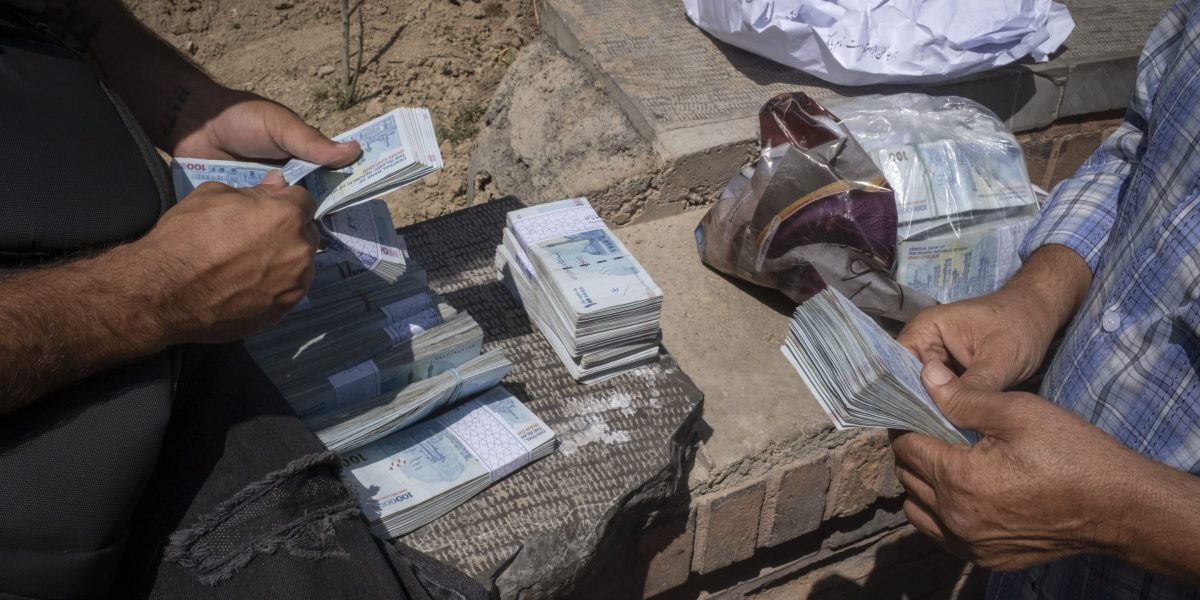
Executive Summary: A Currency in Freefall
The Iranian rial has fallen to a new historical low against major foreign currencies, marking an unprecedented economic crisis for the Islamic Republic. Driven by intensifying restrictions on oil exports, severe banking friction, and systemic foreign reserve depletion, the national currency has experienced accelerated depreciation in unofficial open-market trading across Tehran and regional financial hubs.
Efforts by the Central Bank of Iran (CBI) to stabilize exchange rates through market auctions and dollar injections have struggled to curb the downfall. As the domestic currency rapidly loses purchasing power, panic has spread among local businesses and consumers, prompting an aggressive capital flight into tangible assets, hard foreign currencies, and digital investments.

Escalating Pressures: Central Bank Struggles to Defend the Rial
In response to the downward spiral, Iran's central monetary authorities launched emergency measures, deploying hard currency reserves to curb speculation on the open exchange market. Despite injecting tens of millions of dollars into commercial foreign exchange platforms, market liquidity remains severely constrained, doing little to mitigate the momentum of the rial's decline.
Traders in Tehran reported a dramatic surge in demand for foreign exchange, with exchange shops facing long lines and constrained supply. Financial analysts note that intervention capacity is inherently limited when structural foreign currency inflows are fundamentally compromised by broader diplomatic and financial blockades.

The Root Cause: Shrinking Oil Revenues and Banking Disruption
At the heart of the current foreign exchange crisis lies a severe deficit in international revenue collection. While Iran has historically relied on petroleum exports as its primary source of foreign currency generation, heightened global compliance mechanisms, shipping constraints, and secondary sanctions have severely bottlenecked these crucial trade channels.
Furthermore, even where petroleum transactions take place, international banking restrictions prevent Tehran from efficiently repatriating funds back into its domestic banking ecosystem. Billions of dollars in energy sale proceeds remain frozen or locked in shadow banking channels and bilateral trade credit arrangements in foreign nations, effectively preventing the central bank from maintaining adequate foreign reserves.
Domestic Fallout: Citizens Race to Protect Assets
The accelerating devaluation of the national currency has ignited widespread anxiety among everyday citizens and commercial enterprises across Iran. With double-digit inflation eroding purchasing power on a weekly basis, household savings stored in rials face severe real-value destruction.
In response, Iranians are increasingly abandoning the national currency to seek refuge in alternative investments. Capital is rapidly flowing into physical gold coins, foreign banknotes, real estate, motor vehicles, and cryptocurrency assets in an effort to hedge against currency collapse.
"When the national currency loses its stability, holding cash becomes a guaranteed loss for ordinary households. People are converting their savings into anything that can hold value, from physical gold to international currencies."
The domestic commercial sector has similarly felt the strain. Importers of essential goods and raw manufacturing components report escalating difficulties securing foreign exchange allocations, leading to supply chain disruptions, rising consumer prices, and widespread market uncertainty.
Macroeconomic Outlook & Potential Ramifications
Economic observers warn that without fundamental structural changes, improved access to global banking channels, or a significant restoration of oil export revenue repatriation, the rial will remain vulnerable to further devaluations. Key challenges facing policymakers include:
- Depletion of Liquid Reserves: The central bank's capacity to continuously sell foreign currencies on the open market is fundamentally tied to available liquid reserves.
- Escalating Inflation Dynamics: Currency devaluation rapidly translates into higher import costs, pushing consumer inflation higher across food, medical supplies, and basic industrial commodities.
- Widening Fiscal Deficits: Government budget estimates reliant on specific foreign currency exchange targets face severe deficits, increasing reliance on domestic monetary expansion.
As the economic divide widens, analysts emphasize that domestic monetary interventions alone are unlikely to resolve the systemic trade and reserve challenges currently facing the country.
News & Media Credits: Information and media compiled from verified reports by Fortune, Reuters, and Iran International. Image rights retained by respective publishers.